Historisize - The Pill

Through thorough research, I curated data and imagery to create an educational reference poster, visually describing and framing female contraception, for a history class in a middle or high school classroom. The poster simplified a complex event to be easily digestible and appropriate for the audience. This was communicated through proximity, color, opacity, and size to create a hierarchy that can be interpreted at various distances
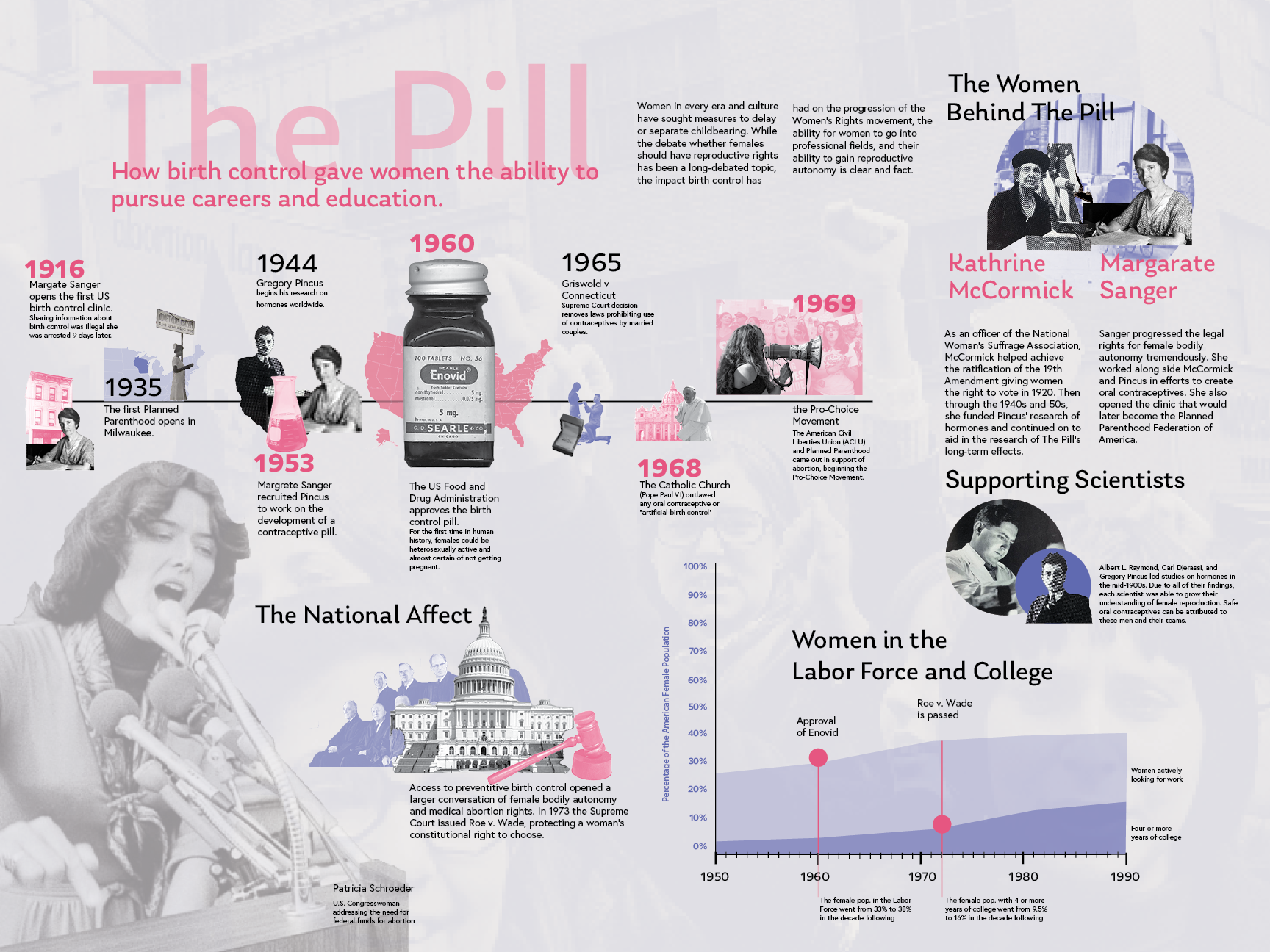
An infographic titled 'The Pill' discusses the history of birth control and women's reproductive rights in the United States. It features a timeline from 1916 to 1969 with key events such as the opening of the first birth control clinic, research on hormones, approval of contraceptive pills, and legal changes. The infographic includes images of women, scientists, and historical figures, with emphasis on pioneers like Margate Sanger and Margaret Pincus, and their contributions to women's health. It also highlights the role of scientific research and legislation in women's reproductive autonomy.

The iterations

Setting

01

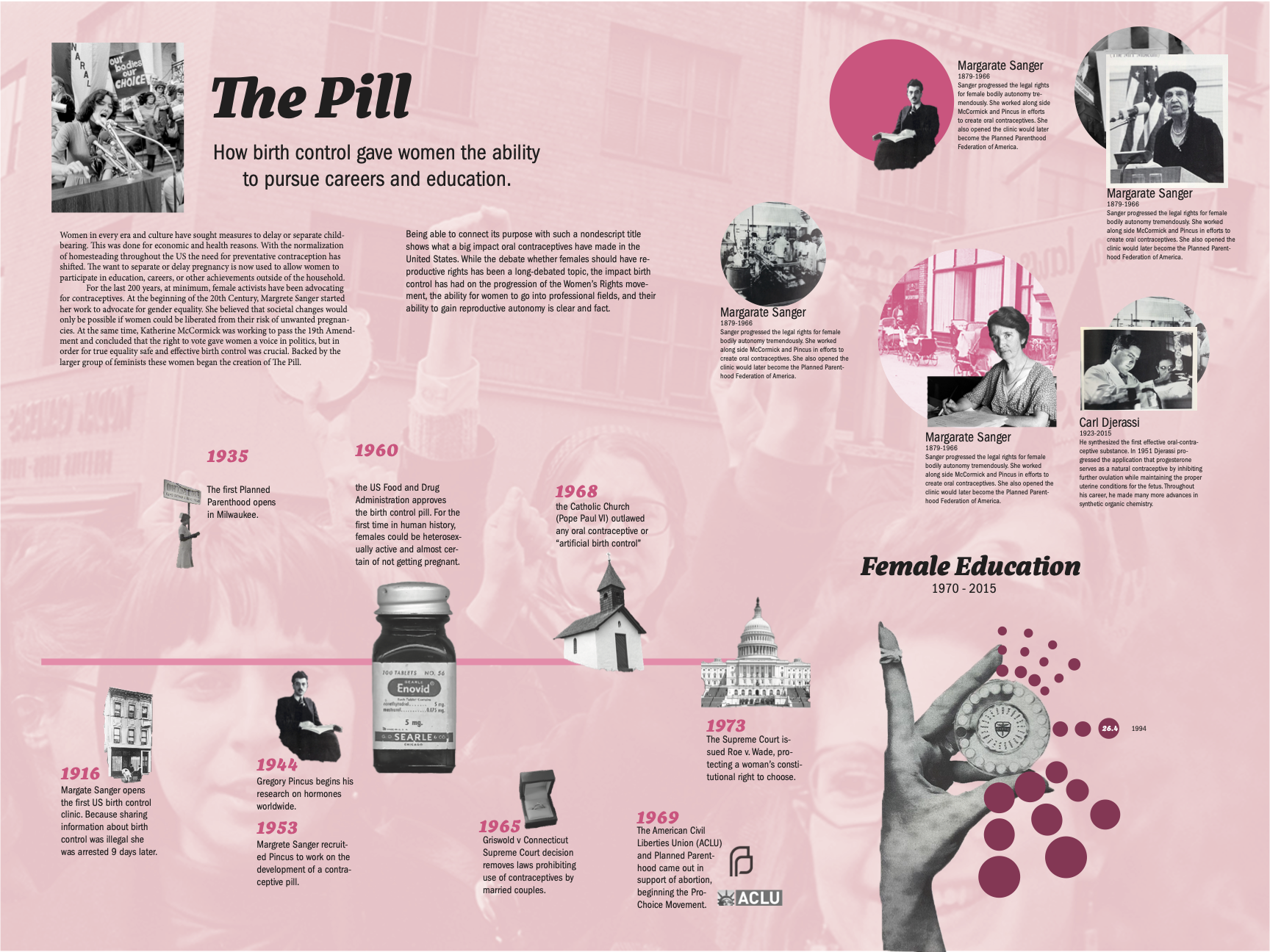
To begin the process I synthesized information from a plethora of media looking at the activists’ stories, scientists reasoning for developing the pill, and the cultural shift of female independence.
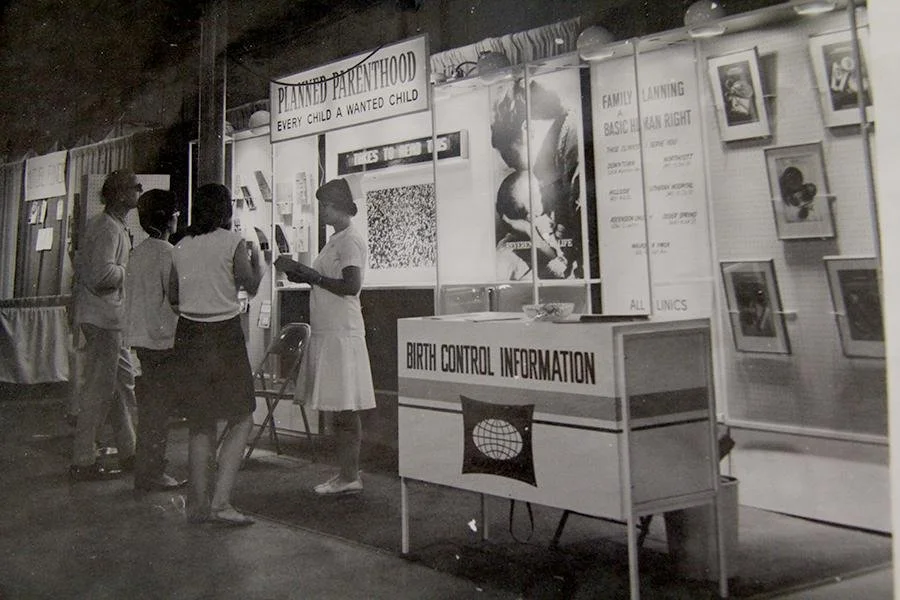
A black and white photo of a booth with signs that say 'Planned Parenthood' and 'Birth Control Information'. Four women are engaged in conversation at the booth, which has framed photographs and informational posters on display.

Project Type
Infographic Poster

I researched the history and collected assets to compile the visual and literary information.
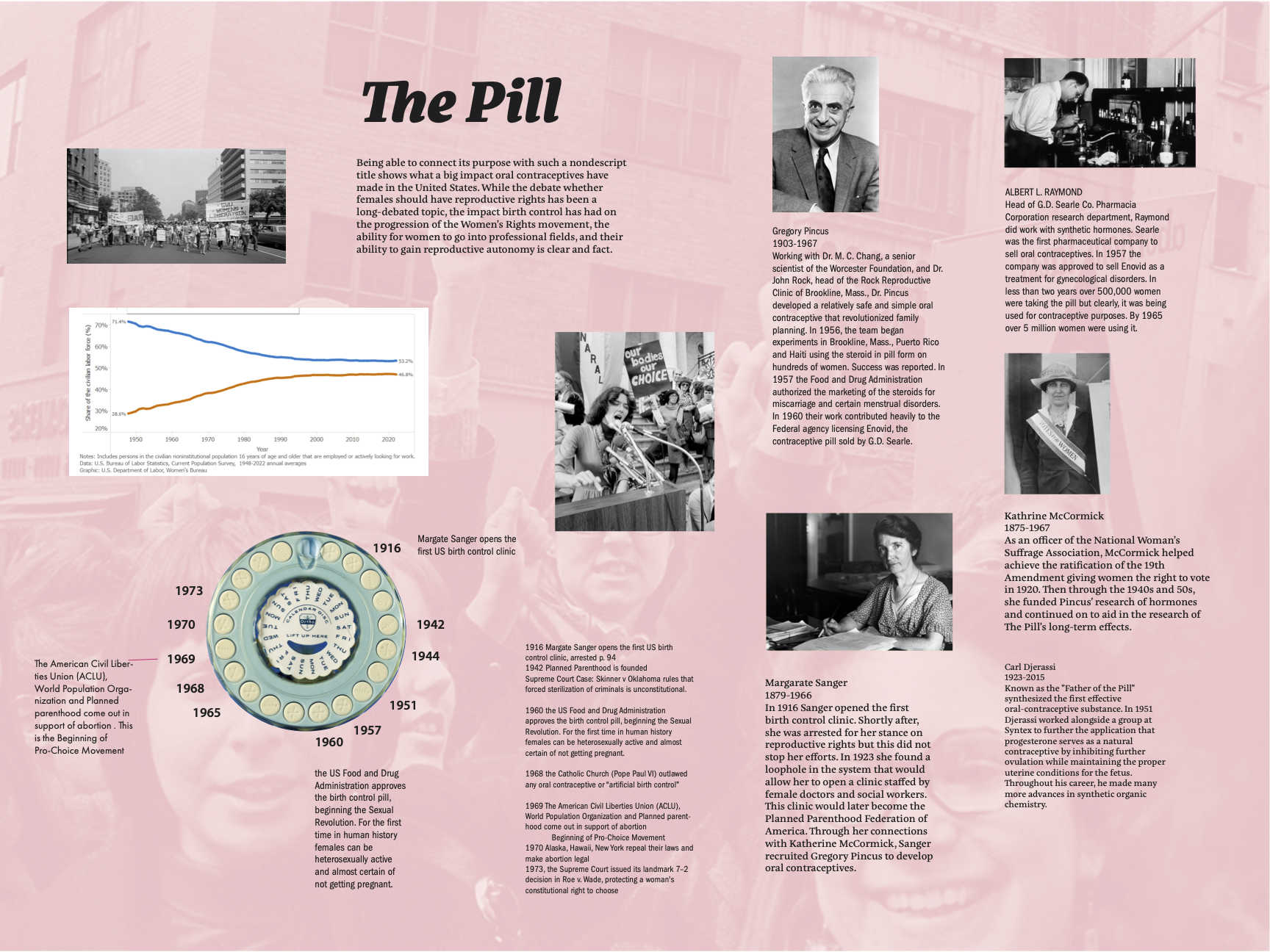
A collage of black and white photos and graphics related to the history of women's reproductive rights and contraception in the United States, including images of protests, notable figures, a historical chart, and a birth control device, set against a pink background.
A timeline infographic with historical photos and text about women's reproductive rights and birth control, featuring key figures and events from 1916 to 2015, with a pink background and black and white images.
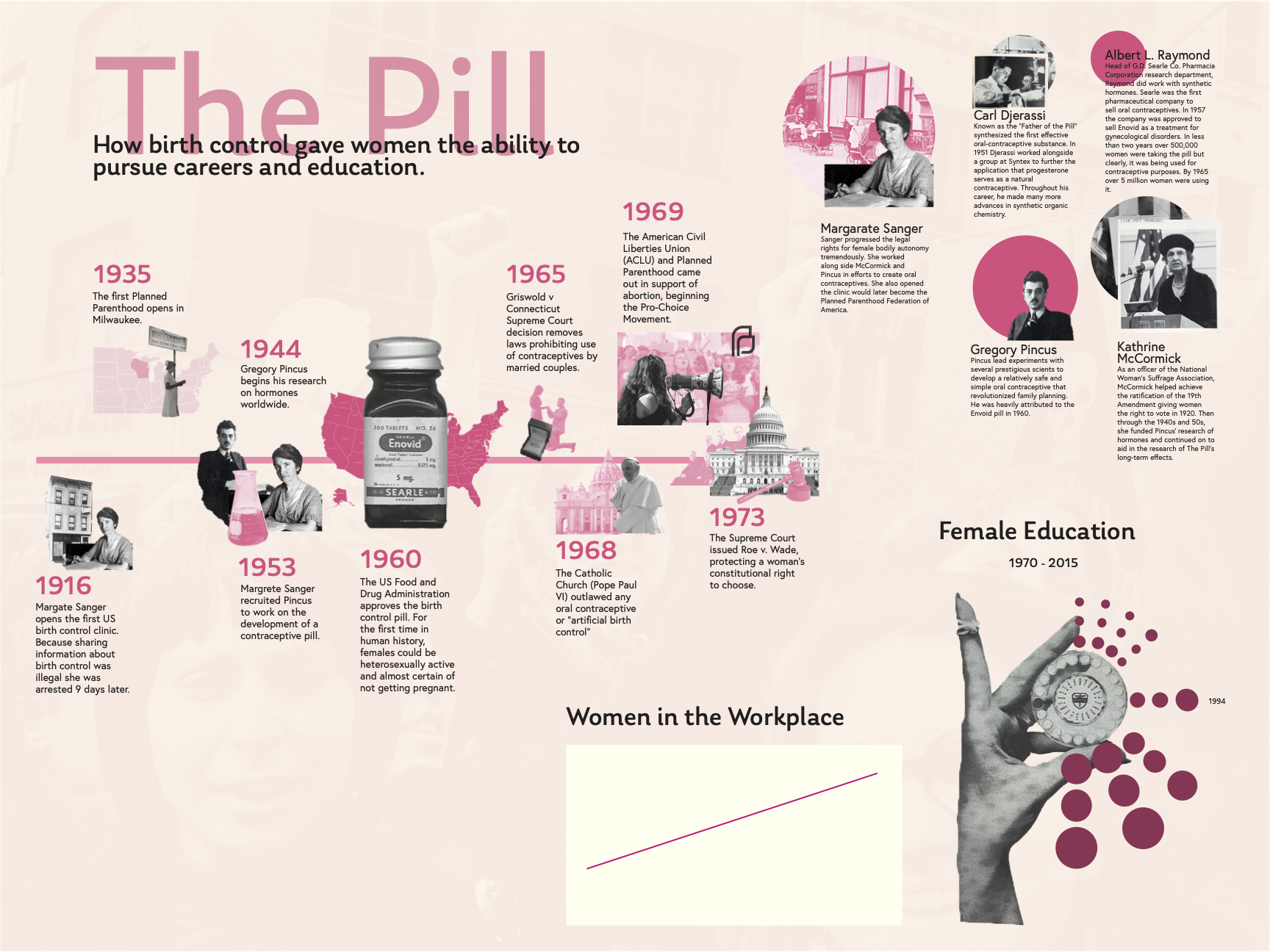
A timeline infographic titled 'The Pill' illustrating the history of birth control and women's education from 1916 to 1994, featuring photographs and key events.
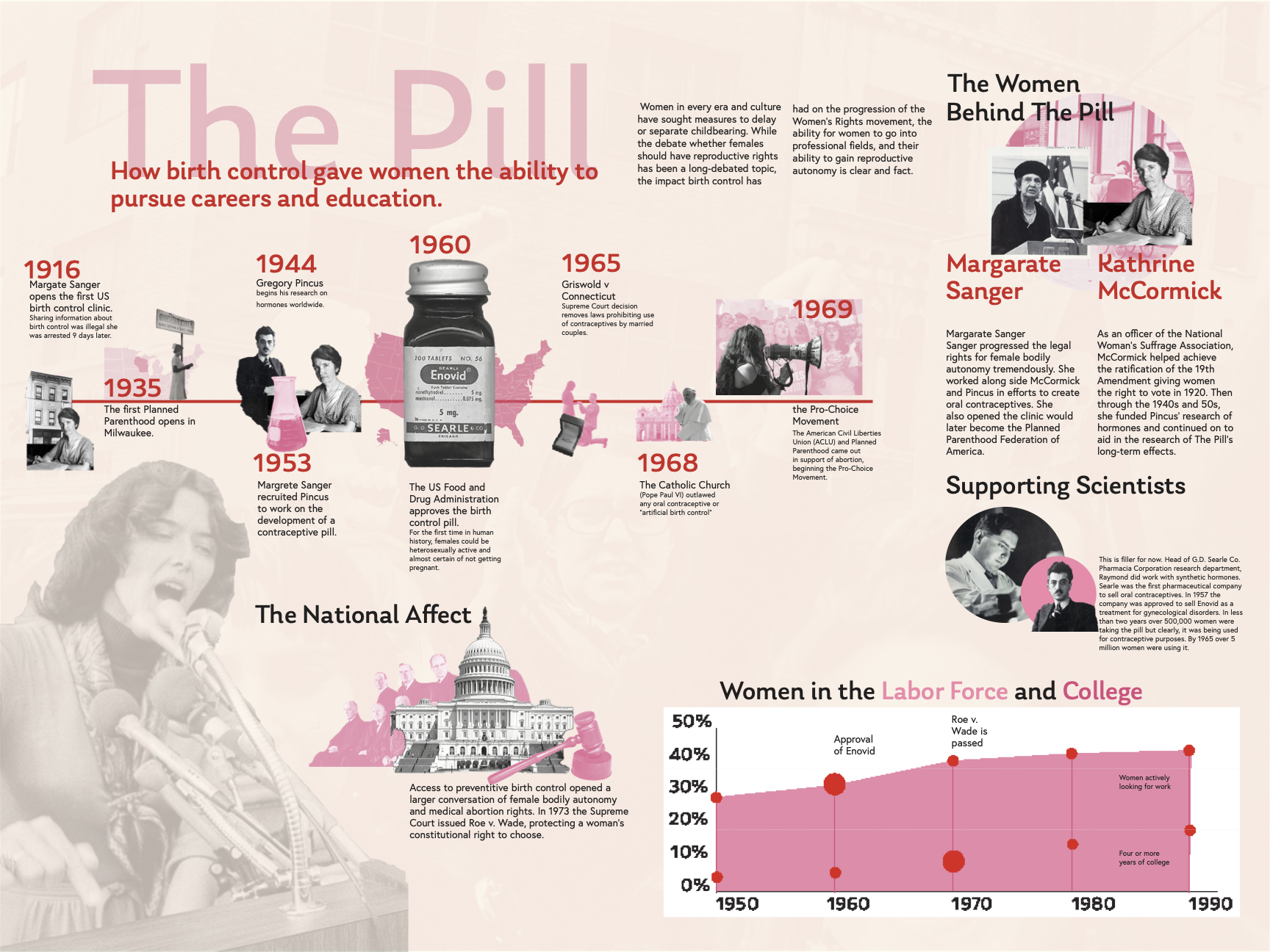
A detailed infographic titled 'The Pill' describing the history of birth control and women's reproductive rights in America, featuring a timeline with key dates, figures such as Margaret Sanger, Kathrine McCormick, and Gregory Pincus, and sections on women's involvement in labor and college education.
A timeline infographic about the history of birth control in women, featuring key events from 1916 to 1969, including figures like Margate Sanger and Gregory Pincus, and highlighting changes in legal and medical advancements.
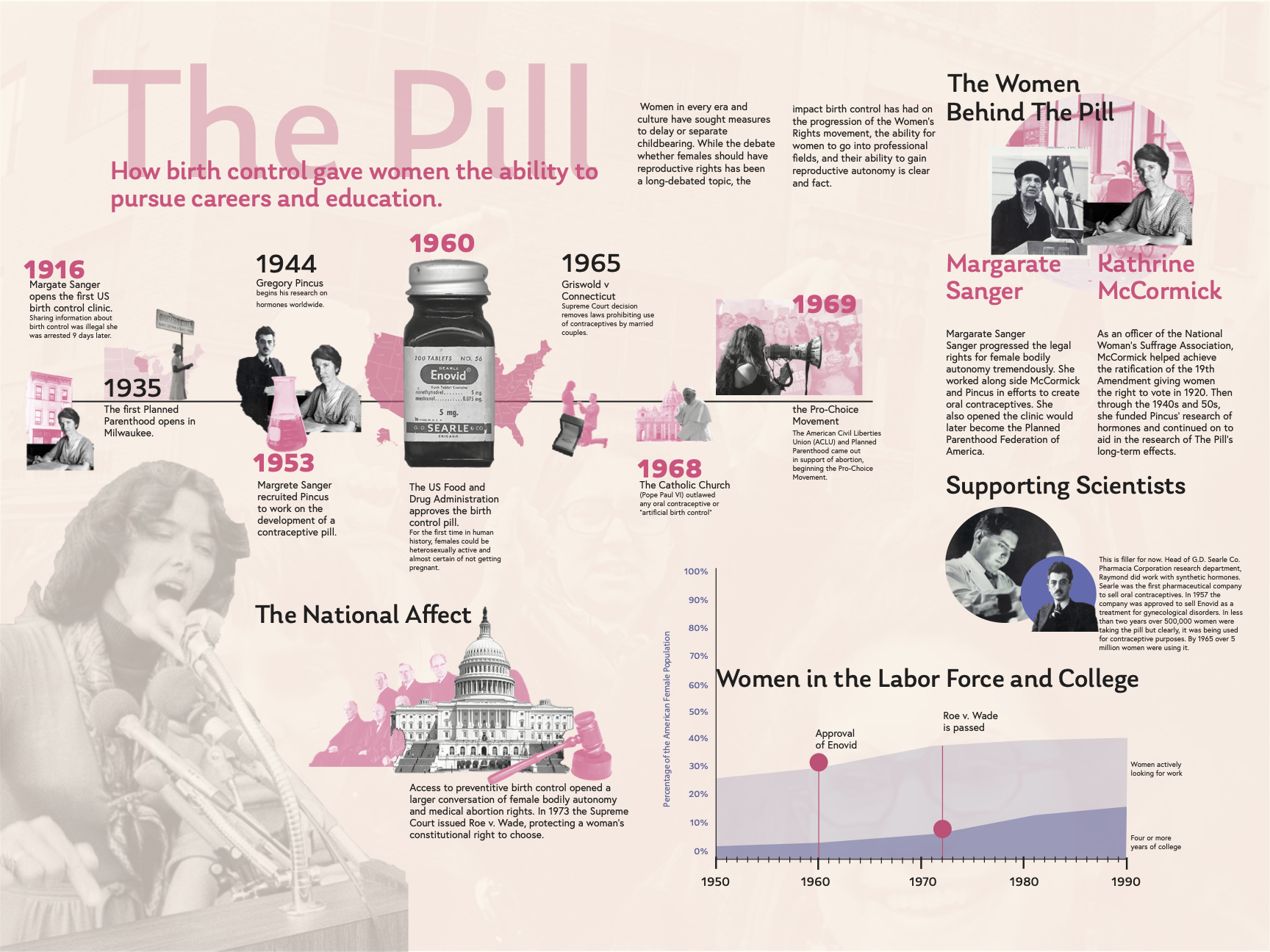
Infographic about the history of birth control and women's reproductive rights in the United States from 1916 to 1990. It includes milestones such as the opening of the first birth control clinic in 1916, the development of contraceptive pills, and the legalization of abortion.

Narrative

02

The timeline was formed to support the written information visually and organize the sequence of events.

A scientist or chemist in a laboratory mixing chemicals. The workspace contains various laboratory glassware, bottles, and equipment.

Cause

03

In this iteration, I researched why access to contraception was sought out. This was applied both in the biographies and data visualizations.

The timeline imagery was replaced with symbols that communicate the event and support the text.

Affect

04

The ways contraception affected the United States were incorporated into this iteration.

The biographies were narrowed down to emphasize key players.

Refinement

05

The focus was on completing the narrative and strengthening the continuity. In addition, I directed my attention to improving the hierarchy.

Final

06

The finished version included refinement in formatting, hierarchy, and alignment.